
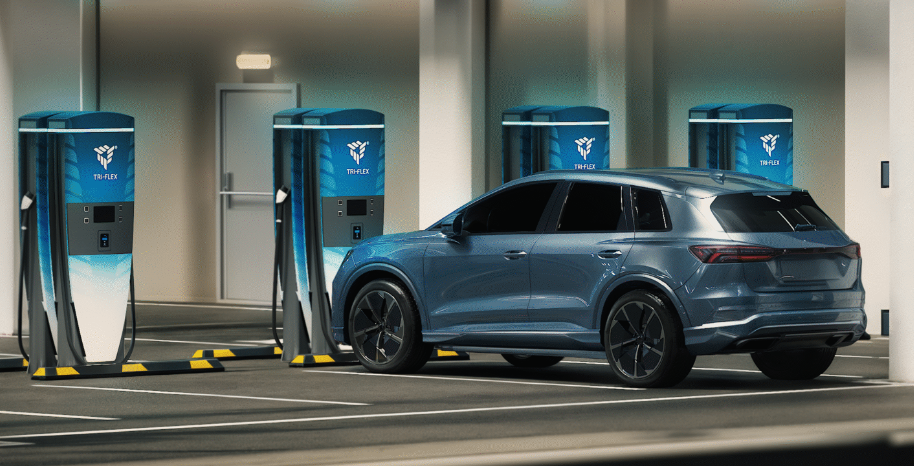
The electric-vehicle (EV) revolution is accelerating fast – and with it comes an urgent need for flexible, reliable, and scalable charging infrastructure. Traditional fixed-capacity chargers may have served early adopters well, but as EV adoption surges globally – across personal vehicles, fleets, buses, trucks, and more – the demands on charging networks are changing rapidly. For Charging Point Operators (CPOs) and investors looking to stay ahead, scalable infrastructure is no longer optional. That’s where modular charger architecture comes in – and why it’s poised to define the future of EV charging.
In this post, we explore how Tritium Charging modular-design approach delivers the scalability, flexibility, and efficiency the next generation of EV charging requires.
Understanding Modular Charger Architecture
What Is Modular Charger Architecture?
Modular charger architecture refers to a design philosophy where the charging system is built from discrete, interchangeable modules – rather than being a monolithic, fixed-capacity unit. Instead of purchasing a one-size-fits-all charger, operators can deploy modular chargers configured to today’s demand, and expand or upgrade the system in phases as usage grows or technology evolves.
This approach differs from conventional all-in-one chargers, which are delivered with fixed power capacity and configuration. With modular architecture, the charger system becomes future-proof: operators purchase what they need now and scale or adapt as demand or requirements change.
Key Components of a Modular Charger System
- Power Modules / Hubs – Modular power electronics and conversion units that can serve one or many dispensers, depending on scale.
- Dispensers (Charge Points) – Modular dispensers that connect to the hub and can be mixed and matched (e.g., 100 kW, 200 kW, 400 kW) depending on site needs.
- Shared Power / DC Microgrid Architecture – A shared power pool allocates available electricity dynamically across dispensers. This reduces infrastructure overbuild and enables better use of grid resources.
- Modular, Replaceable Electronics – Modules and components designed for field-serviceability, easy replacement, and upgrade, enabling rapid maintenance and long-term flexibility.
Through this modular architecture, infrastructure operators obtain hardware flexibility, scalable charger system capabilities, and a path toward future-proof expansion without disrupting existing services.
Benefits for CPOs and Investors
Scalability for Growing EV Fleets
As EV adoption accelerates – from personal cars to commercial vehicles, fleets, buses, and trucks – the demand for charging infrastructure will grow both in number and variety. A modular charger architecture allows site hosts to begin with modest capacity and grow incrementally.
For example, modular platforms can support a wide range of dispensers per hub, facilitating multiple charge points from a single power conversion unit. Operators can mix dispensers of different power levels (100 kW, 400 kW and 640 kW), tailoring the setup to site needs – whether for passenger cars or heavy-duty commercial vehicles – thus building a truly customizable, scalable charger system.
This scalability ensures that as EV fleets grow, charging infrastructure can expand seamlessly – avoiding costly overhauls or premature overinvestment.
Rapid Maintenance and Reduced Downtime
One of the often-overlooked drawbacks of older charger systems is maintenance complexity: a failure in a monolithic charger can take the entire station offline. Modular design changes that dynamic.
Because modular chargers use field-proven modular components, maintenance becomes simpler: faulty modules can be quickly replaced, minimizing downtime and service disruption.
Additionally, modular chargers are built in sealed, liquid-cooled enclosures that withstand harsh environments, enabling reliable operation in extreme temperatures and reducing environmental wear and tear.
These design features lead to high reliability and uptime – a critical factor for operators and investors who depend on availability for ROI.
Hardware Flexibility and Future-Proofing
Modular architecture is inherently future-oriented. As EV charging standards evolve, battery capacities increase, and different types of vehicles join the road, charging infrastructure must adapt accordingly.
With modular systems:
- Operators can mix and match dispenser types (different power levels) in the same site.
- Upgrades can happen incrementally – without decommissioning or replacing entire chargers. The shared power hub + dispensers architecture offers flexibility to adapt as demands change.
- For grid-constrained or off-grid locations, certain models allow connection to third-party DC power sources, enhancing deployment flexibility.
This approach ensures that charging sites remain relevant even as EV technology and usage patterns shift.
How Modular Design Drives ROI and Investment Confidence
From an investor or CPO’s perspective, modular charger architecture offers a more predictable, efficient, and capital-efficient growth path than conventional static chargers.
- Phased Capital Expenditure: Instead of committing a large sum upfront to full-capacity chargers, operators can start small and scale capacity as demand grows – aligning investment with actual utilization.
- Reduced Total Cost of Ownership (TCO): Liquid-cooled, weather-sealed enclosures and efficient shared power infrastructure reduce maintenance costs over time.
- Higher Utilization & Throughput: Shared power architecture allows more chargers to draw from the same power source, increasing charger density and maximizing revenue per site.
- Lower Maintenance Costs & Downtime: Modular components are easier and faster to service or replace, leading to higher uptime.
- Future-Ready Infrastructure: Hardware can be upgraded or expanded as EV standards and power requirements evolve, preserving long-term investment value.
All these factors reduce operational risk and increase confidence for investors and operators planning large-scale deployment or long-term EV infrastructure investment.
Emerging Trends & The Role of Modular Design in Fueling EV Growth
The EV market is evolving quickly – not only in terms of vehicle numbers, but also in terms of diversity: passenger cars, commercial fleets, heavy-duty vehicles, buses, trucks, and more. Simultaneously, grid constraints, evolving power standards, and varied real-world deployment contexts demand flexible, resilient charging infrastructure solutions.
Modular charger architecture meets these emerging needs:
- Mixed-power dispensers allow charging stations to serve both light EVs and heavy EVs at the same site, without separate infrastructure.
- Shared-power hubs and modular DC microgrid architectures reduce grid-upgrade requirements – critical in areas with limited grid capacity or where rapid roll-out is needed.
- Modular systems with liquid-cooled, sealed enclosures enable deployment in extreme climates, from cold regions to desert heat.
- Incremental growth capabilities allow operators to align expansion with real-world demand, minimizing stranded capacity and optimizing investment.
In short, modular design isn’t just efficient – it’s essential to meet the rapidly shifting, varied, and growing demands of a global EV ecosystem.
Conclusion – Future-Proof Your EV Charging Network with Modular Architecture
As EV adoption becomes mainstream, charging infrastructure must evolve from fixed-capacity, one-size-fits-all charger units to flexible, scalable, and upgradeable systems. Modular charger architecture offers exactly that – enabling operators and investors to build charging networks that grow with demand, adapt to technological change, and deliver high uptime and efficiency over long operational lifetimes.
With modular platforms featuring shared power hubs, interchangeable dispensers, liquid-cooled sealed enclosures, and DC microgrid architecture, site hosts gain a competitive edge: they can start small, scale smartly, and future-proof their investment. Contact us today to learn how Tritium Charging can help you build a flexible and future-ready EV charging network.
FAQ
1. What is modular charger architecture?
A system design where EV chargers are built from interchangeable modules, allowing easy upgrades and scalability.
2. How does a scalable charger system benefit EV operator?
It lets operators expand charging capacity incrementally as demand grows, reducing upfront costs.
3. What is rapid maintenance in modular chargers?
Faulty modules can be quickly replaced without shutting down the entire charging station.
4. Why is hardware flexibility important for EV chargers?
It allows chargers to adapt to new standards, different vehicle types, and evolving power requirements.
5. How does modular design future-proof EV infrastructure?
It enables incremental upgrades, scalability, and adaptation to changing technology and fleet demands.